

Why It's Time to Move Beyond Traditional Kiosks
Visitor management kiosks have become a familiar sight in corporate offices, hospitals, schools and government facilities.
But the technology behind the kiosk is changing.
Traditional visitor kiosks can require locally installed software and device-specific configuration. As organizations expand visitor management across locations, maintaining those endpoints can add another responsibility for IT and security teams.
A web-based approach provides an alternative.
What Is a Web-Based Visitor Management Kiosk?
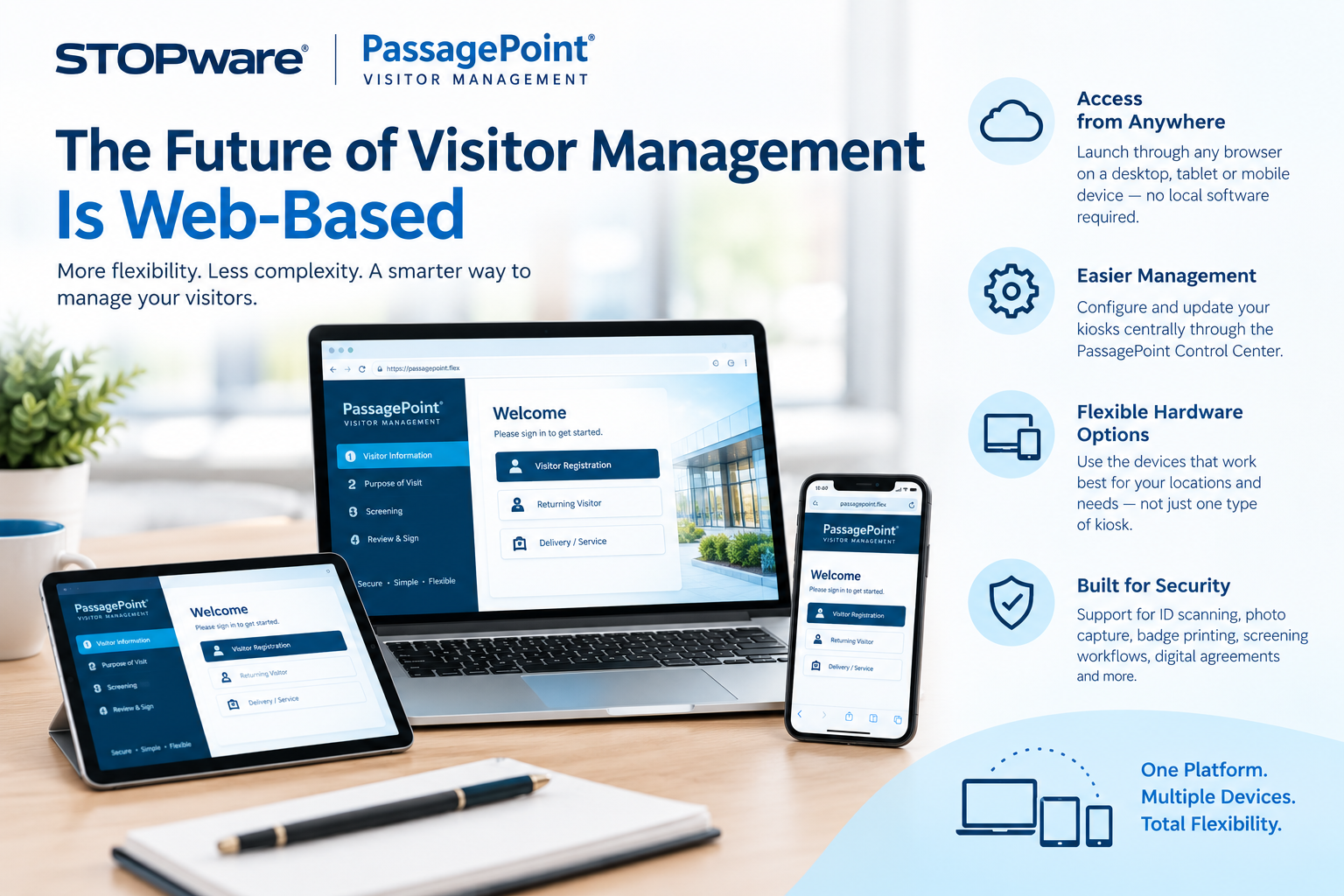
Instead of relying on visitor management software installed directly on a kiosk computer, a web-based kiosk allows the visitor registration experience to launch through a browser.
PassagePoint Flex Self Sign-in Terminal was designed around this model.
Flex can launch from browser-enabled desktops, tablets or mobile devices, allowing organizations to create a self-service visitor experience without requiring a local software installation.
Why Does Web-Based Matter?
The difference may sound technical, but the potential operational benefits are straightforward.
1. No Local Software Installation
Removing the requirement for a local installation can simplify kiosk deployment and reduce the amount of software that needs to be managed at individual stations.
2. Greater Hardware Flexibility
Organizations aren't necessarily limited to one type of kiosk device.
A browser-based approach enables Flex to operate across browser-enabled desktops, tablets and mobile devices, providing greater flexibility when selecting hardware.
3. Easier Centralized Configuration
Flex kiosk stations can be defined centrally through the PassagePoint Control Center, eliminating the need for local kiosk setup.
For organizations managing multiple visitor entry points, centralized configuration can simplify administration.
4. Flexibility for Different Locations
The visitor process required at one entrance may be different from another.
Flex supports category-specific screen flows, configurable fields and localization, allowing organizations to create visitor experiences that reflect different site and visitor requirements.
Web-Based Doesn't Mean Less Secure
Making the kiosk easier to deploy doesn't mean eliminating important visitor security processes.
Flex can support capabilities including ID scanning, photo capture, visitor badge printing, digital agreements, health and safety questionnaires, sign-in/out tracking and access restrictions.
The goal is to combine the flexibility of web-based technology with the security requirements expected from a modern visitor management solution.
A More Flexible Foundation for Visitor Management
Organizations are continually reevaluating how technology is deployed and managed.
Visitor management should be part of that conversation.
Moving from locally installed kiosk applications toward a web-based model can provide organizations with greater hardware flexibility and centralized administration while continuing to support secure visitor processing.
PassagePoint Flex brings that web-based approach to visitor self-registration.
Want to see how it works? Request a PassagePoint Flex demonstration.
The web-based claims here follow the sell sheet’s description of browser-based access across desktop, tablet and mobile devices and its hardware-agnostic positioning. Centralized station configuration and category-specific workflows are also specifically identified.